
ECONOMIC REVIEW – January 2026
Brian Goodstadt, CFA
Chief Investment Officer
AI Buildout Fueling Economic Growth
Economic growth slowed in 2025, with real GDP rising an estimated 2.0%, compared with 2.8% in 2024, though activity strengthened in the second half of the year. A major driver of growth was an estimated $430 billion in AI-related capital spending from six large technology firms, accounting for roughly 30% of overall GDP expansion.
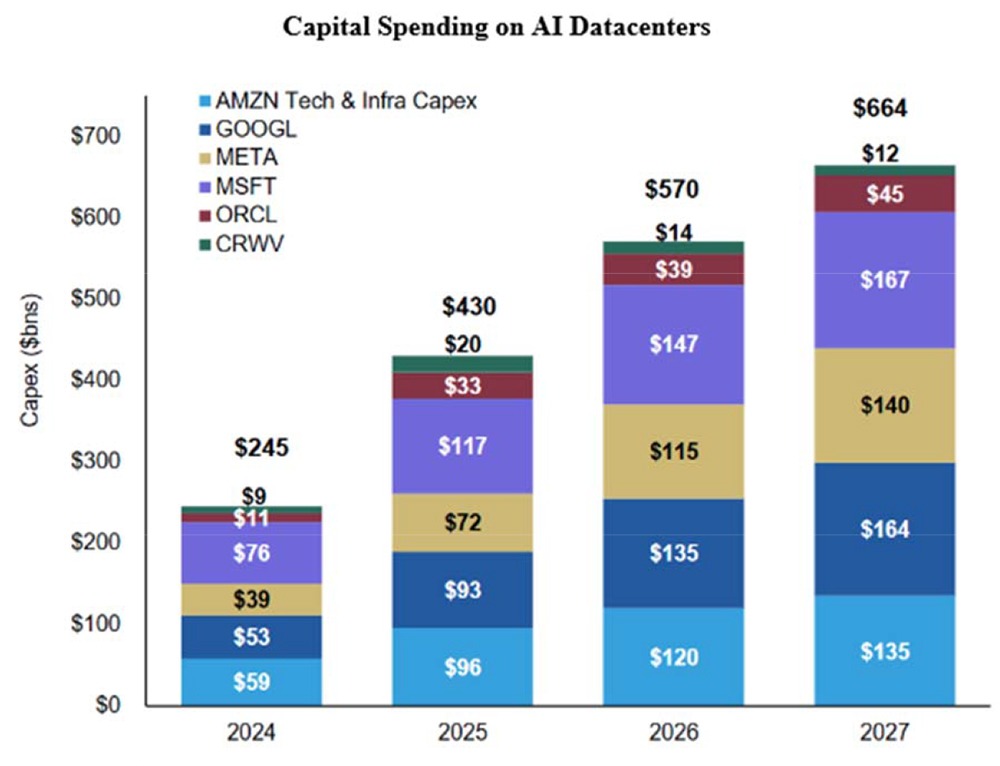
Source: Company data, Morgan Stanley Research estimates
Looking ahead, GDP growth in 2026 is expected to remain near current levels, with potential upside. AI-related spending is projected to rise another 33% to $570 billion, and new fiscal and monetary stimulus should add support. The OBBBA tax bill, enacted in July 2025, is expected to boost economic activity through tax cuts, refunds, and incentives for businesses to spend more on equipment and R&D. The Congressional Budget Office estimates the legislation could add 0.9 percentage points to GDP growth in 2026. However, another government shutdown and the potential end of ACA healthcare subsidies could offset these benefits and weaken the economy.
K-Shaped Economy
The rapid expansion of AI-focused sectors contrasts sharply with weakness in other parts of the economy, giving rise to what many describe as a K-shaped economy. On the upward trajectory are industries benefiting from AI investment, elevated corporate profit margins, and the wealth effect of rising markets. As shown below, corporate profit margins are near an all-time high.
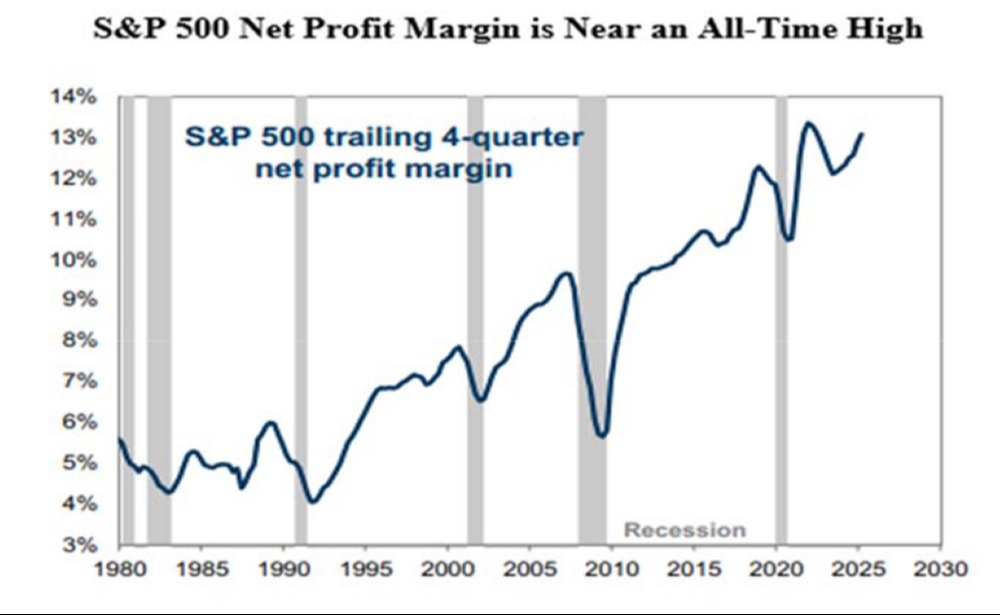
Source: Compustat, Goldman Sachs Global Investment Research
The lower portion of the “K” is defined by households squeezed by higher prices for groceries, rent, and energy. Recent college graduates have experienced rising unemployment at a faster rate than the broader labor force. These pressures are reflected clearly in consumer-sentiment surveys, which are near historic lows, with the past decade being shown below. This divergence helps explain why markets and the broader public often perceive economic conditions very differently.
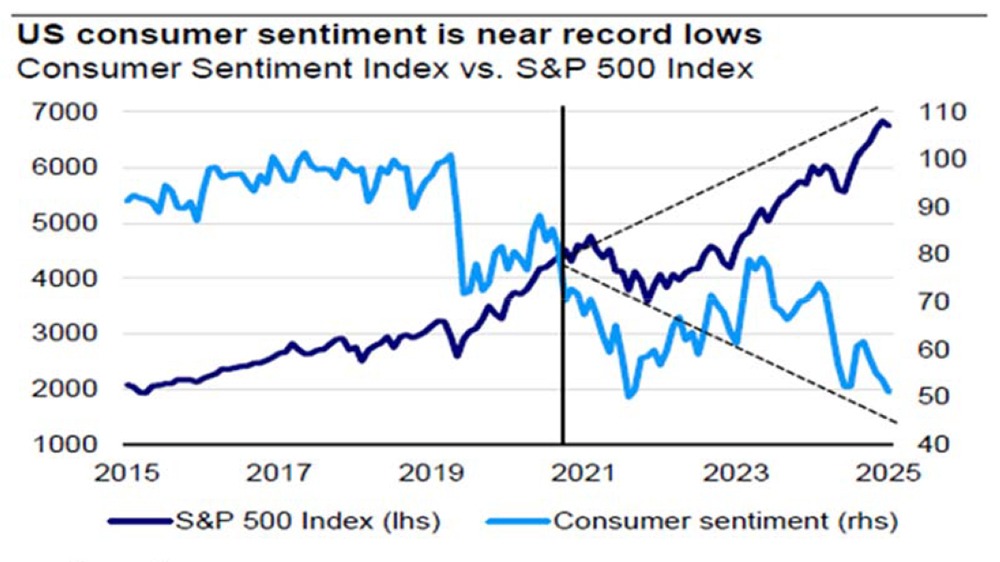
Source: Invesco
At the same time, several structural and policy-related forces are amplifying stress on the lower portion of the ‘K,’ particularly among households more exposed to rising costs. Tariff-related inflation may ultimately prove temporary. However, labor-market pressure in more vulnerable segments could persist. Research from the Federal Reserve Bank of San Francisco, spanning 150 years of global tariff increases, suggests tariff rate hikes behave like demand shocks, tending to raise unemployment while lowering inflation, as shown below. This research suggests that rising tariffs may slow hiring even if headline inflation eases, reinforcing pressure in already vulnerable segments.
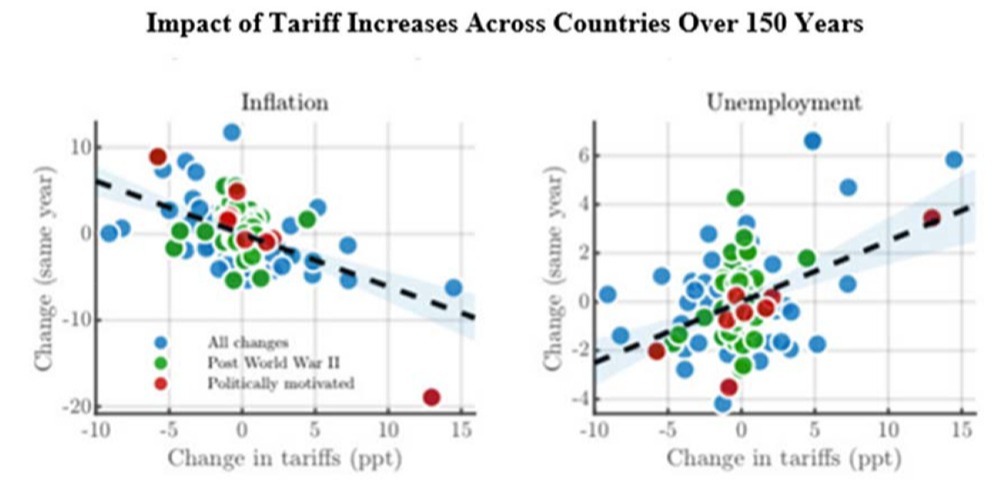
Source: Federal Reserve Bank of San Francisco
Recessions Becoming Rare
Despite frequent recession calls, downturns in the U.S. have become less common and shorter in recent decades. The economy’s shift from manufacturing toward services has reduced its sensitivity to interest rates, inventory cycles, and traditional business cycle dynamics. Instead, brief and isolated “rolling recessions” by sector have become more typical.
In recent decades, broad recessions have been triggered by unexpected shocks, with COVID being the most recent example. Tariff increases had the potential to serve as another shock, but their economic drag has been largely offset by the surge in AI investment and by the fact that most sectors remain unaffected by tariffs.
Forecasts from economists and prediction markets currently place the 12-month recession probability at about 30%, which is a little higher than normal recession risk. Consensus expectations call for 2.0% GDP growth in 2026, unemployment peaking around the current level of 4.6%, and corporate earnings growth accelerating to 17% with further margin expansion. The most credible risks to the expansion include a slowdown in AI spending, consumer pullbacks as tariff costs flow through more fully, or an unforeseen shock.
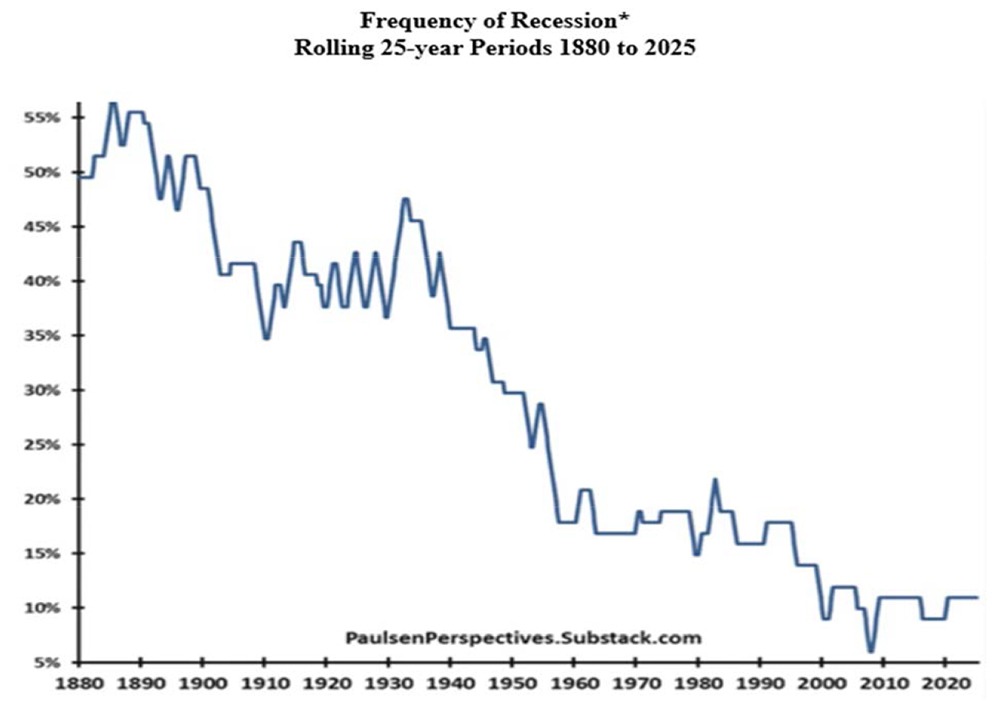
*Quarterly base on NBER Recession definition since 1855
Summary
AI investment has become a primary engine of U.S. economic growth, offsetting the drag from tariffs and weakness in more fragile segments of the economy. While the AI buildout and supportive fiscal policies are contributing to solid aggregate growth, these gains are unevenly distributed, producing a K-shaped dynamic across industries and households. Recessions have become structurally less frequent, and current forecasts point to continued modest expansion in 2026. Still, risks remain concentrated in any slowdown in AI spending, renewed consumer strain, or unexpected macro shocks.