
Economic Review - October 2026
Brian Goodstadt, CFA
Chief Investment Officer
Inflation Is Starting to Strain Consumers
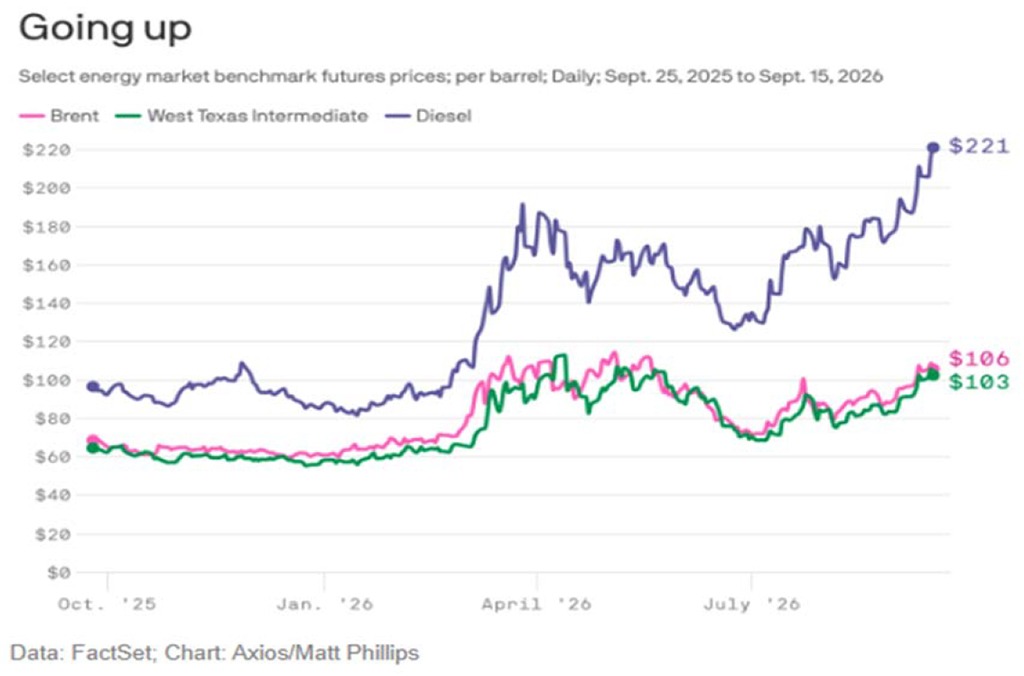
In the first half of this year, the One Big Beautiful Bill Act (OBBBA) was a tailwind for consumers, providing about $160 billion of tax cuts. That boost has since been fully offset by higher gas prices, which have cost consumers about $180 billion in additional expenses (roughly half a percent of gross domestic product, or GDP).
Gas prices have risen more than 50% from the beginning of the year (and diesel prices set a new alltime high in September, topping $6.50 per gallon, according to AAA), costing households an average of $1,400 extra. Consumers have absorbed this expense by saving less rather than by cutting other spending, which has kept the economy growing. The personal saving rate fell from 4.4% at the start of the year to 3.0% in the third quarter, near the lowest level on record going back to 1946 (it was only lower from 2005 to 2007 and briefly after COVID).
In other words, the consumer is getting tapped out, and if gas prices don’t decline, consumers will soon need to cut back on spending, slowing the economy. The tax cut tailwind fades next year; will the oil price headwind?.
Federal Reserve Catches Up to Bond Markets by Raising Rates
In a unanimous vote on September 16, the Federal Reserve (the Fed) raised short-term interest rates by a quarter point, to a range of 3.75% to 4.00%, its first increase since July 2023. The decision not only affirmed the Fed’s independence, which had been in question, but also signaled an effort to rein in inflation. Fed Chair Kevin Warsh stated plainly that “inflation is too high, and has been for too long,” adding that “today’s action starts to show that we’re serious about this.”
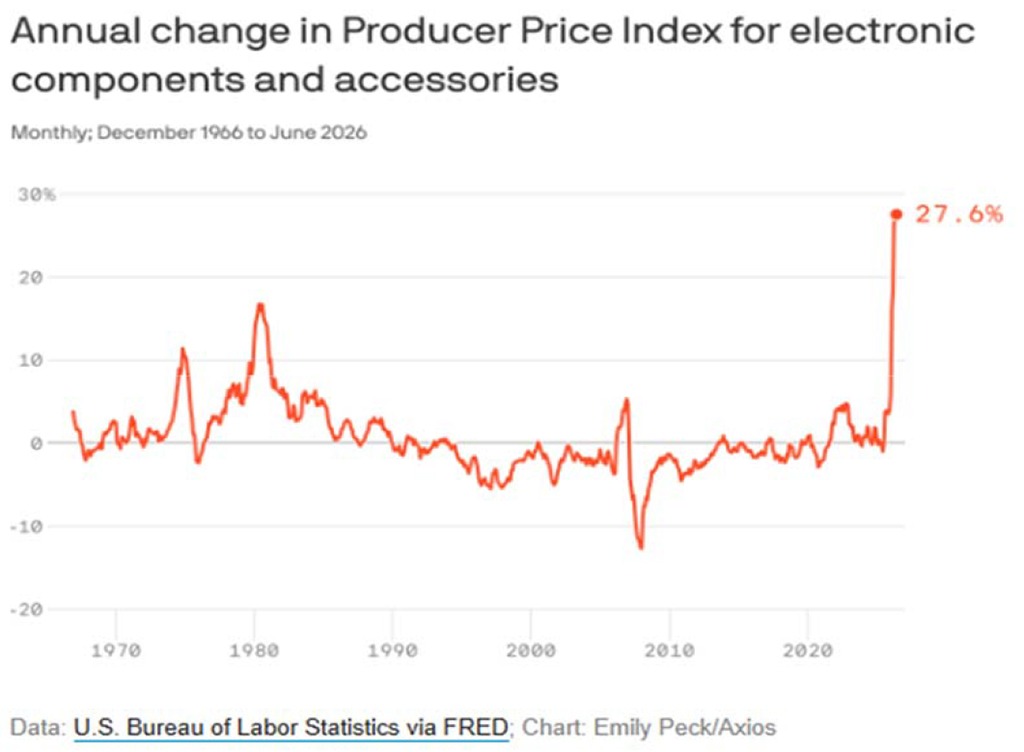
As we discussed last quarter, inflation is partly due to higher oil prices, and partly due to immense spending on the buildout of artificial intelligence (AI) infrastructure. The latter shows up clearly in producer prices for electronic components, which rose 27.6% in the 12 months through June 2026, the fastest pace by far going back to 1966, as shown below. These costs are feeding through to the prices of consumer devices such as smartphones.
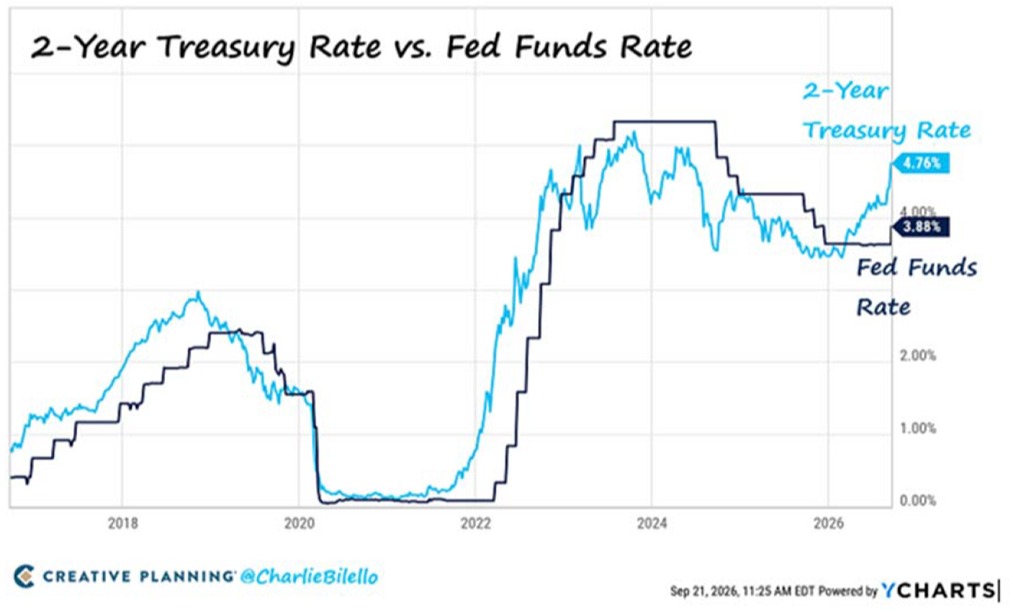
Despite the intense market focus on the Fed’s actions, the Fed typically follows the bond market’s lead. The federal funds rate usually adjusts to catch up with the 2-year Treasury yield. In this case, the Treasury bond market has clearly signaled that rates need to be higher, forcing the Fed to follow suit. As of September 30, the 2-year yield stood at 4.89%, about 100 basis points above the effective federal funds rate, as shown below (through late September). The bond market is signaling the need for further rate hikes, and if history is a guide, Fed hiking cycles rarely stop at one increase.
Earnings Estimates Are Rising at a Historic Pace
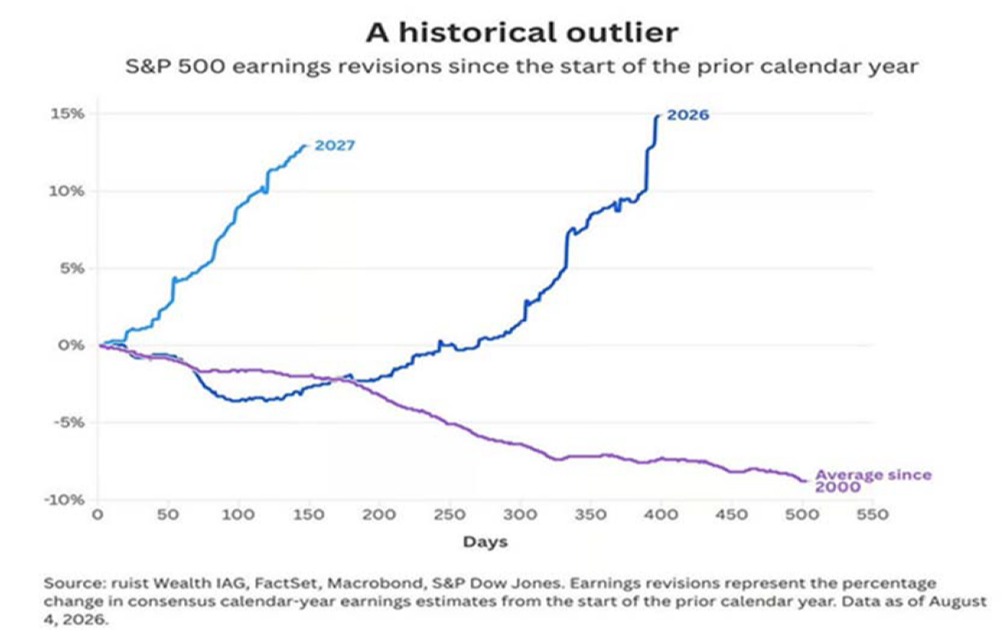
Typically, earnings estimates begin the year overly optimistic and decline throughout the year. This year has been an anomaly, with earnings and forward estimates for this year and next surging. Consensus 2026 S&P 500 estimates have risen roughly 15% since the start of 2025, compared with a typical decline of about 9% over a comparable period since 2000, as shown below. About 10% to 15% of earnings this year are due to one-time factors, such as the unrealized gains on private investments we discussed last quarter, particularly for the large technology companies.
Tariffs were a headwind for most of the past year, but tariff refunds have now become a tailwind, as refunds have outweighed new tariff collections. The windfall has gone largely to companies rather than consumers. Apple, Walmart, and Costco have recorded more than $2 billion each in refunds in recent months.
Even excluding those non-operational items, earnings have been rising strongly. The same price rises in oil and electronics that are taking money out of household budgets are the largest reason S&P 500 earnings estimates are going up, as technology component manufacturers and energy companies reap the benefits.
Current Economic Outlook and Summary
The U.S. economy continues to grow, while persistent inflation led the Fed to raise interest rates in September. However, leading economic indicators are mixed (according to the Conference Board Leading Economic Index), with about half pointing to increased economic activity and half showing declining activity, and the consumer is starting to feel the strain of higher gas prices.
There is still potential upside to economic growth over the next few years from continued technology spending, but also potential downside from headwinds consumers are facing. The outlook is more mixed than it was earlier in the year. Consensus economic forecasts are notably stable over the next few years, calling for steady GDP growth, low unemployment, and continued large budget deficits.